
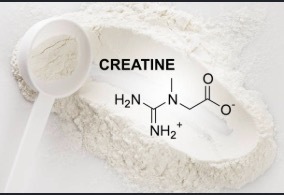
Creatine: What the Research Actually Says
If you train with us, ask your PT a supplement question, or just spend five minutes on fitness social media, you've probably had a conversation about creatine. It's one of the questions I get asked most often in the clinic, so I wanted to put my answer in writing.
Short version
I think creatine is fine for most people. It's one of the most well-researched supplements available, and the safety data is genuinely reassuring.
Here's the longer version.
It's Been Studied for Decades
Creatine isn't a new or trendy compound — it's been used in sports nutrition since the 1990s, and the research base has only grown since. Reviews covering thousands of participants across hundreds of trials consistently find no meaningful difference in side effects between creatine and placebo, even at higher doses or over long durations. Long-term studies tracking users for years — including some multi-year trials — have not turned up evidence of kidney or liver harm in healthy people.
That volume and consistency of evidence is exactly why I'm comfortable recommending it. Very few supplements on the market have this much data behind them.
The Standard Dose: 5 Grams a Day
Most of the research — and most of the real-world use — centers on 5 grams per day (some protocols use a "loading phase" of higher doses for about a week, followed by a 3–5 g/day maintenance dose, but loading isn't necessary; you'll reach the same saturation point on 5 g/day, it just takes a few weeks longer).
At this dose, the evidence is strong and consistent for:
-
Improved high-intensity exercise performance and power output
-
Supporting muscle mass and strength gains alongside resistance training
-
A well-established safety profile, even with years of continuous use
What About Brain Health?
This is where I tell people to pump the brakes a little. There's genuinely interesting emerging research on creatine and cognitive function — including some higher-dose studies (around 10 g/day and above) looking at brain phosphocreatine levels and cognitive outcomes. It's a promising area, but it's early. The evidence here is much thinner and less consistent than the performance data at 5 g, so I don't think it's fair to market 10 g as a proven "brain health" dose the way 5 g is a proven performance dose. Worth watching, not worth overselling.
My Actual Advice
- 5 grams a day is the well-supported, evidence-backed dose for most people's performance and strength goals.
- Pay attention to how you feel. The most common side effect is mild GI discomfort or water retention, and it's uncommon at 5 g. If you notice negative side effects — GI issues, cramping, anything that doesn't sit right with you — stop taking it. Your response matters more than the research average.
- If you have kidney disease or another relevant condition, talk to your doctor first. The safety data is for healthy adults; it's not a blanket clearance for everyone.
- Don't chase the 10 g "brain health" dose based on hype. If cognitive research develops further, I'll update this — but right now it's not the slam-dunk that the performance dose is.
Bottom line: creatine is one of the few supplements I feel genuinely confident about because the research backs it up. Start at 5 g, listen to your body, and don't overthink it.

Chase Perez
Contact Me


.png)

.png)